

KA220-SCH - "Clean Environment-Clean School Climate" with Creative
Environmental Practices in School Education

Our world is rapidly drifting towards disaster due to environmental destruction, unconscious water use, unplanned tree cutting, irregular waste management, etc. We must all say STOP to this together!
Human-induced climate change has caused widespread loss and damage to nature and humans. Slowing climate change requires urgent action. This is the key target in the sixth assessment report of the Intergovernmental Panel on Climate Change (IPCC). In 2020, a total of 1.75 million tons of hazardous waste was delivered for approved treatment. This is an increase of almost 6 percent over the previous year. Looking at a longer time frame, the amount of hazardous waste has increased by exactly 117 percent since 2003 (https://www.ssb.no/). Every Oslo resident throws away around 300 kilos of waste a year. On average, each person living in Oslo threw away 85kg of food waste in 2021. 42 kg of this was properly separated. Accordingly, each resident threw away an average of 18 kg of plastic packaging in 2021, of which 5 kg were correctly sorted (https://www.oslo.kommune.no/). This negative attitude has had a similar result in our schools, especially with the spread of ready-made food products.
However, with the creation of a "student mass" of a conscious consumer society, the waste rate can be reduced to a much lesser amount than the current situation. This expectation is very important for a sustainable clean environment and ideal climatic conditions. Making the recycling of existing solid wastes a culture will be an important step. The most important purpose of recycling is to reduce the amount of waste and prevent the depletion of resources and to prevent unnecessary use of resources. It also prevents problems such as recycling, transportation or storage of solid waste.
Environmental education, on the one hand, conveys ecological information, on the other hand, it provides the development of attitudes towards the environment in individuals and the transformation of these attitudes into behavior. Environmental education addresses students' cognitive, affective and psycho-motor learning domains. Environmental education is the process of developing attitudes, value judgments, knowledge and skills for the protection of the environment, displaying environmentally friendly behaviors and seeing the results of these. This thought has motivated us and our partners for a more livable school and world. The main source of our motivation for the project is the extraordinary artistic products that will be developed with the recycling of wastes with our project, the environment and climate themed curriculum contents to be developed in different disciplines, the digital games and applications with environmental education content that will allow open access to all users, and the prediction that the amount of solid waste in schools will decrease by 60%. The expectation that such an impact will turn into a corporate culture from a global perspective and that the amount of possible waste will decrease to much less than the current situation is another motivating factor and the reason for financing the project.
LET'S PROTECT OUR ENVIRONMENT


Our project outputs
Interdisciplinary Educational Practices: Environment and climate themed
curriculum contents
Curriculum Teacher Application Guides
Web Portal and mobile application
Download Mobile App : https://old.my.mobiroller.com/downloadAPK/Index?apk=3433153097472.apk
Scan QR code for Mobile Application

Conference


Transnational Workshop Products


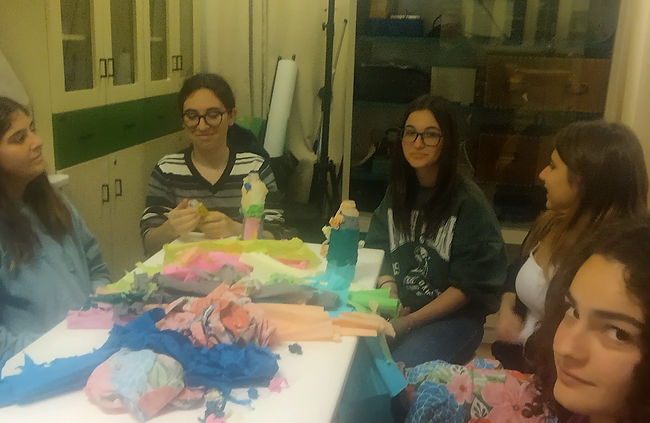


VIRTUAL EXHIBITION
Click here
PARTNERS.
Our Erasmus project is carried out within the scope of a strategic partnership themed on environmental education with five schools, one university and one NGO institution from Greece, Romania, Italy, Austria, Türkiye and Croatia, under the coordination of Norway.


